
AI-Powered Smart Glasses Raise Privacy Concerns as Their Use Grows
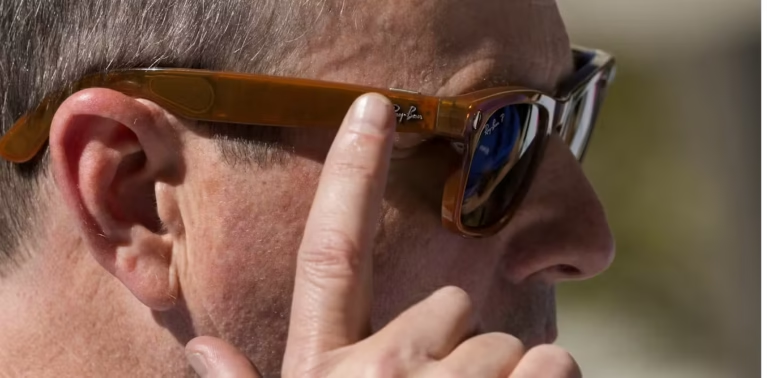
The use of artificial intelligence-powered smart glasses is rapidly increasing around the world, offering users a range of features such as hands-free calls, music, AI assistance, photography and video recording. However, the growing popularity of the technology is also raising concerns about privacy and secret recording.
Smart glasses equipped with cameras allow users to capture photos and videos without holding a smartphone or a traditional camera. While the technology offers convenience, experts are concerned that people in public places may be recorded without knowing that a camera is being used.
Smart glasses developed through the partnership between Meta and Ray-Ban are among the most prominent products in the market. Millions of pairs have reportedly been sold, highlighting the growing interest in wearable devices powered by advanced technology.
Privacy concerns have already led some organisations to take action. In the United Kingdom, an organisation operating around 800 pubs has reportedly banned filming with smart glasses at its venues over concerns that the devices could be used for discreet surveillance. Organisers of a Comic event in Northern Ireland have also introduced restrictions over concerns about secret recording.
Women’s rights organisations have also raised concerns about the possible misuse of camera-equipped smart glasses. Experts say that people can often notice when they are being recorded with a smartphone or conventional camera, while smart glasses can make recording much less obvious.
There are also concerns that the technology could be misused for harassment, recording people without consent and other unlawful activities. Experts believe that clear rules regarding privacy and consent will become increasingly important as smart glasses become more common.
Despite these concerns, the technology also has positive applications. Content creators are using smart glasses to record everyday experiences and interactions, while experts believe the devices could also provide useful assistance to people with visual impairments.
Experts say smart glasses could become an increasingly common part of everyday life, but their rapid development also highlights the need for stronger privacy protections, clear consent rules and appropriate legal safeguards.